Heat generators, with which you forget about problems with gas, and the cost of drying is 6–12 UAH 1 t/%
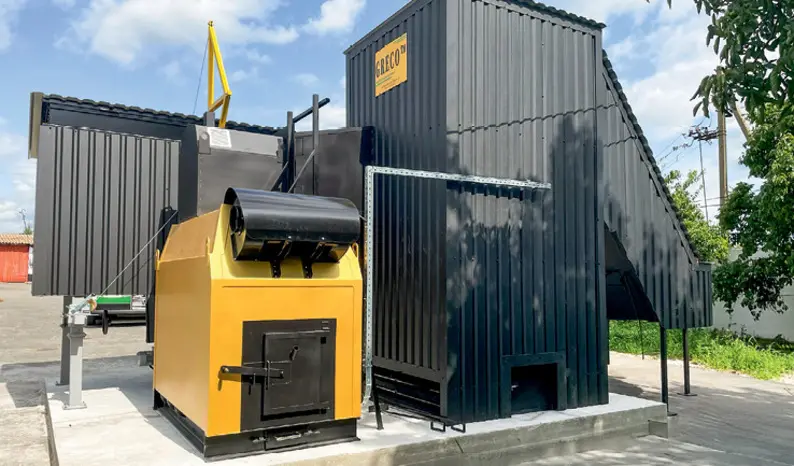
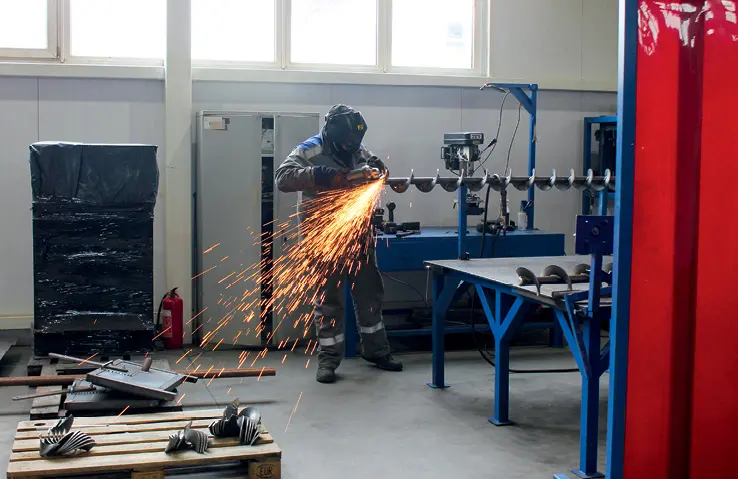
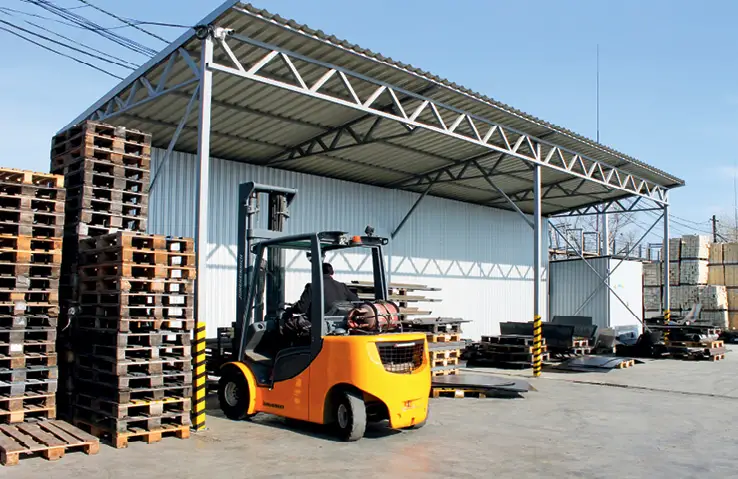
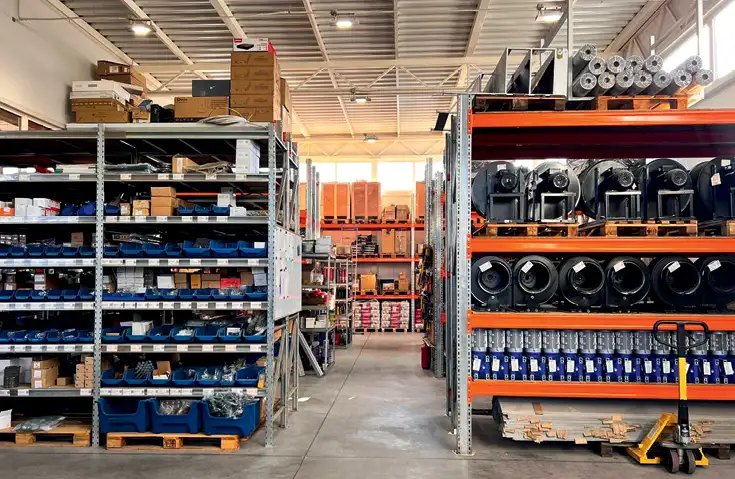
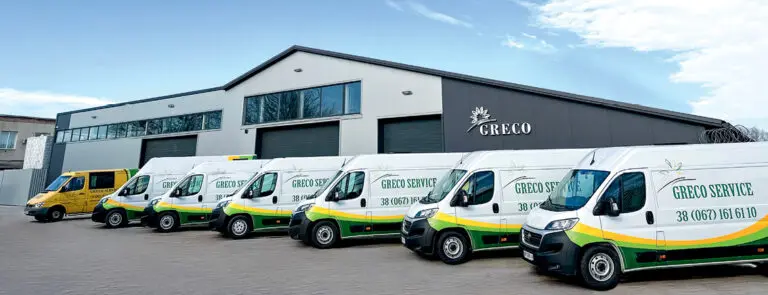
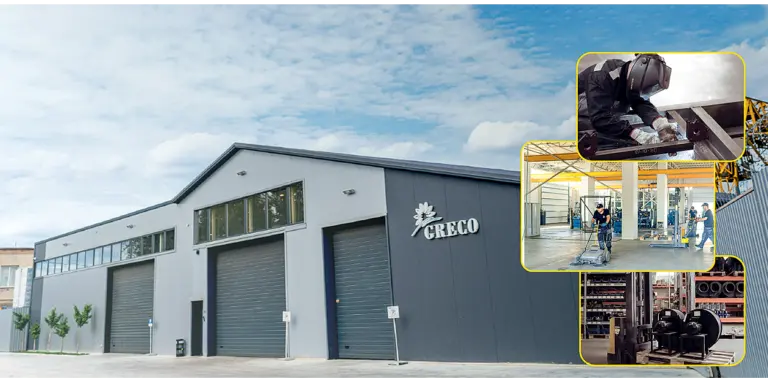
The factory gleamed like a brand-new coin. The grounds were spotless, with the concrete surface being maintained by a small electric cleaning tractor that constantly moved around the yard, where work was underway to assemble stoves made of firebrick. The floors in the workshops are just as spotless; welders are at work, a laser metal-cutting robot is operating, and programmers are at their workstations, with a large monitor displaying a clear list of all the facilities for which the equipment is being manufactured, along with the order fulfilment status. The components warehouse is meticulously organised. In front of the office, there is a row of company service cars and minibuses. I have visited such factories in Sweden, the UK, Germany and elsewhere. However, I did not expect to see a fully European production culture and European standards in Vinnytsia.
This is exactly what the production of Greko Group’s solid-fuel heat generators looks like, and it is clear why they are in operation at 480 sites across Ukraine.
Vinnytsia seems to be one of the most peaceful cities in the Ukrainian war; the conflict rarely reaches this far, yet we are all caught up in the same war. That is why I expected to see signs of wartime at the Greko Group factory – production halted, gloomy faces and palpable sadness…
However, things turned out quite differently. Work was in full swing, the factory was bustling with life and energy – and what a factory it was!
We walked past the service vehicles in the yard, whilst Ivan Korzhenko, the founder and director, explained:
– Without after-sales service, no industrial equipment makes sense today; a customer will only work with a company if they know they will be looked after at all times, and that repairs and spare parts are the supplier’s responsibility. That is why we have our own fleet of 12 service vehicles, 28 service engineers and a separate, fully stocked spare parts warehouse, which guarantees a rapid response to the site. Our client base is in the mid-to-high-end segment; no one will listen to excuses like ‘put yourself in our shoes, it’s stuck at the border…’ and so on. That is not a professional approach. We have everything in stock and have ensured the efficiency of our work in advance. An elevator cannot stop if a gearbox breaks down; everything must work smoothly and efficiently – we have already entered spacious workshops where a laser cuts metal, whilst the operator monitors the software operations on a screen. – There are plenty of craftsmen on the market who knock together products of dubious ‘quality’ in their garages, yet position themselves as John Deere. We manufacture everything in series; industrial machines are set up for series production, everything is rational and logical, and mass production helps us service the heat generators quickly. There are seven different models, but in many respects they are standardised, with interchangeable parts.
I noticed that most of the workers are young, which is something you don’t often see in factories or in the fields. Young people prefer the excitement of working at a laptop rather than standing at a welding machine.
‘I’m 38 myself,’ smiled Ivan Ivanovich. ‘So anyone under 38 is considered young here. Since 2023, we’ve been rejuvenating our workforce by recruiting the best graduates from vocational colleges – we take in whole graduating cohorts, train them, and half of them stay on with us permanently. Just recently, four of them came on work placements; they’re all working, but this isn’t just an experiment – they’re actually carrying out critical operations, meeting the required quality standards, and doing exactly what they’ll be doing once they’ve finished their training. What’s more, it gives us an opportunity for growth, as these young people can bring innovative solutions to our production processes.
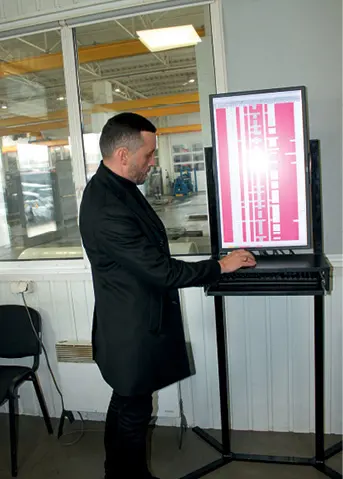
We stopped in front of a vertically mounted monitor, and Ivan Korzhenko remarked:
– Look, there are 103 items listed here, but each item consists of different units. Integrating them into a single control and accounting system helps us manage production and order fulfilment without errors and meet deadlines. Here is the ‘Signet’ holding company, and here is the dispatch date. In other words, the production manager has no room for manoeuvre. The key to our group’s success is that we never fall behind schedule. The system was developed specifically for our production; it is effectively a conveyor belt, and representatives of the most renowned German firms have even photographed it for their own reference. Simplicity and linearity are its main features. The result is efficiency. Equipment ready for dispatch is marked green, that in the assembly process is marked orange, and cut-to-size sets are marked red. We have 64 workers, including service specialists. As the production manager can see everything, he runs production in batches, so everything gets done much faster. Furthermore, we have a very clear division between production staff and service engineers. We also have a separate warehouse for production – this way we have prevented the risk of any spare part running out. Most elevator equipment manufacturers in Ukraine provide service in the following way: they take people from the workshop and assign them to service work. Our division of responsibilities means that our service engineers carry out installation work and then provide after-sales service for their own installations. However, production staff do not take part in service work.
– How do you manage to stay on time, given the power cuts we have all the time?
– As soon as the power cuts began, we installed diesel and gas generators, as well as a solar power station on the roof of the building – and now that problem no longer exists for us.
On the wall of Korzhenko’s office hangs a large poster featuring dozens of well-known logos of major companies, such as TAS Agro, Vitagro, Ukrprominvest-Agro, LNZ, Zelenaya Dolina, ‘Agrain Elevator Agro’, IMC, ‘Korolivskyi Smak’, ‘Agrotrade’, ‘Tesla Group’ and ‘Agroprosperis’. These are all clients of ‘Greco Group’ – the leading companies in the agri-industrial sector, whose grain silos are powered by heat generators manufactured in Vinnytsia.
‘This is our pride and joy,’ said Ivan Ivanovich, catching my eye. ‘Most of the companies here are holding companies; we’ve been working with them for a long time. And, objectively speaking, holding companies bring together the very best people—grain elevator operators, agronomists, economists and financiers alike.’ Holding companies have the highest standards not only for product quality but also for business practices. Before signing contracts, they scrutinise companies, as a fancy name might just hide three tank drivers and a dog called Patron. European equipment of this capacity simply doesn’t exist. Europe doesn’t have such volumes of grain, and there’s no point in manufacturing heat generators of this capacity. But we have 480 facilities, so our service team is robust and mobile. Some competitors even say that we need a service team because the equipment breaks down frequently. In fact, that’s not the case, as we service facilities that were installed as long as ten years ago.
– How did your production system come about at the company? You didn’t just suddenly arrive at a system where you don’t need to carry round objects and shouldn’t roll square ones.
– We are constantly refining the system, and if everything were perfect, we wouldn’t know what exactly needs improving. How would we know which direction to take? Even the facilities we installed decades ago are still being serviced by us. Our clients are indicators of the areas we need to improve. All 480 facilities provide us with insights. If we compare the equipment and approach we had 10 years ago with what we have now, it’s a huge leap forward, made possible by our clients. No one can give better recommendations on how to improve processes and equipment than our clients. And that is synergy, cooperation. Among our virtues, we have a clean record of court rulings; in all these years, not a single client has taken us to court. Even if something breaks down, we replace it immediately or even replace all the equipment to prevent breakdowns. For example, the Gals Agro holding company provided us with several important comments, which we took into account in subsequent models of heat generators. The client always pushes the company to improve.
– However, change and development are an integral part of this system. How do you manage to develop without compromising on quality?
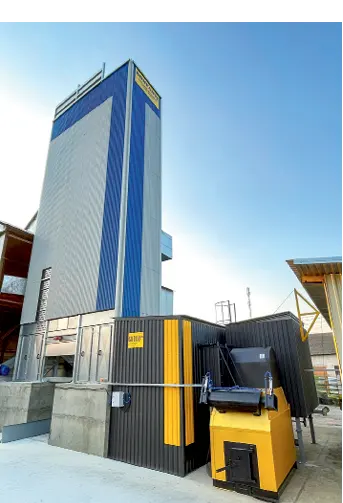
– Yes, indeed, we have started to move much faster. Ukraine is moving towards the European Union. Standards and laws are being brought into line with European ones. And in this regard, we have developed a semi-heat exchanger that prevents combustion products from affecting the grain. It was first installed at ‘Ukrprominvest’, where they dry waxy maize used for baby food. ‘Ukrprominvest’ produces starch from it, which is exported to the EU. Under certain European standards, it is even prohibited to dry some products using propane-butane. We have installed such systems at ‘Ukrprominvest’, ‘TAS Agro’ and ‘Korolivskyi Smak’. ‘Korolivskyi Smak’, incidentally, is a very telling example – they have a very large-scale production facility. They have the latest model of heat generator with a semi-heat exchanger; such equipment is only available from us. This system utilises both the heat exchanger and a small proportion of the flue gases, which go directly – and I emphasise, specifically the flue gases. If the product is a specific type of grain, or pumpkin seeds, or waxy maize, or for processing plants, the use of such a system is highly effective – it completely prevents combustion products from coming into contact with the grain and provides additional safety. We do not manufacture heat exchangers because they are very complicated to operate, clean and so on. Instead, we follow American technology, as we prioritise ease of operation. Our equipment does not require any additional staff. And heat generators with a capacity of 3 MW and 20 MW do not require additional staff. A system with a full heat exchanger requires occasional shutdowns for cleaning, and in agricultural holdings such a shutdown reduces the overall efficiency of the harvest. Holding companies have a great deal of machinery: combine harvesters, KamAZ trucks, and soil-tilling equipment. So if an elevator has to stop operations every three days for 10–12 hours to fully clean the heat exchanger, and then spend another 4 hours getting the dryer back up to speed, this won’t work, as it would halt the maize harvest with enormous risks. Consequently, we developed a semi-heat exchanger system that does not require equipment shutdowns for cleaning. What’s more, the semi-heat exchanger cannot burn out. We have come up with a unique solution, and it can only be installed on our equipment, thanks to the vacuum principle. It is fully integrated into the grain dryer – it controls the heat generator, just like a gas burner.
What’s more, we have a state-of-the-art remote silo monitoring system – this helps prevent losses and enables real-time process control. There have been instances where an operator was supposed to dry maize with a moisture content of 21% at +110°C, but, relying on their own experience, raised the temperature to +140°C. As a result, the client received 14,000 tonnes of over-dried maize, suffered significant losses, but only found out about this several months later when the sale of this batch began. Today, thanks to the remote monitoring system, the customer’s head office can monitor drying parameters in real time, receive immediate alerts, analyse operational history, optimise costs and respond instantly.
Monitoring staff via CCTV is all well and good, but the footage won’t show if the temperature has risen above normal, if the grain is becoming too dry, or if the boiler is using more fuel than necessary.
– So, the semi-heat exchanger is your new product – an innovation for 2025?
– Yes, this is a new product, but it’s not the only one. We also have a system designed for free-flowing materials. Some customers have the misconception that our equipment only works with pellets. In recent years, some businesses have switched to wood chips; there are facilities that run on rapeseed, soya, pea and sunflower pellets, and it is common practice to produce pellets in-house. This brings production costs down even further and provides farm workers with employment in winter. Some enterprises even use maize cobs. These are free-flowing materials, not suitable for standard equipment. This option, which we have already begun to install on a large scale, is used to prevent material from ‘clogging’ in the hoppers, ensuring smooth feeding into the system. However, our main innovation is, after all, full integration with the grain dryer. If any of the dryer’s sensors are triggered, the heat generator detects this at the level of the gas burner. Another common misconception is that people perceive switching to an alternative as a risky move. Therefore, it is important to understand this key point: we are not a risk; we are an alternative and a source of independence. When installing our heat generator, we do not disconnect the gas burners but leave them as a backup fuel source. While the customer is signing contracts, purchasing gas and waiting for permits, our heat generator is already drying their grain. It takes 20–40 minutes to reach operating temperature, whilst others are still standing idle.
The long-term outlook for gas is worrying, as is evident from open sources. The likelihood of gas supply issues for industry has increased significantly. Holding companies have become much more active recently, and they have robust forecasting departments.
– Does the climate, or changes in it, affect your business? Last year was very hot, and people were delivering dry grain…
– Climate change, of course, affects everyone. But how does it affect the production of heat generators at Greko Group? Not at all. Even if the grain is dry, a large-scale farm will still have a few fields where a couple of per cent of moisture needs to be removed. Furthermore, we offer an alternative to traditional drying. That is why we are chosen not so much for financial gain, but for convenience and to increase the independence of businesses. We provide additional flexibility. It happens that in February, 2% of moisture needs to be removed. There have been instances where all the grain went into storage, was put into silos, and it later turned out that some batches were not 14% but 16% moisture. When using gas, you have to sign contracts, purchase gas, stay within limits, and guess how much gas is needed. In our case, all you need to do is press a button – and the problem is solved; you can do this whenever it suits you, even on the night of 31 December to 1 January, without any red tape. It is precisely this flexibility that makes our heat generators so competitive in the market; it is this convenience that appeals to grain elevators. A grain elevator cannot predict how much grain, or what moisture content it will have, will be delivered to it over the next three to four months. In the southern part of the Vinnytsia region, we have a client who accepts grain from farmers until March. He simply switched on the dryer whenever he wanted to. He has long since forgotten about the red tape involved in obtaining gas. Or a holding company with 100,000 hectares, which sows 15,000 hectares of maize. In May and June, when gas prices are at their lowest, it is impossible to predict the exact yield, let alone the grain moisture content at harvest time. Given the effectiveness of our system, major companies such as ‘Zelena Dolyna’, ‘TAS Agro’, ‘Ukrprominvest-Agro’, ‘Gals Agro’ and around 16 other agricultural holdings have switched fully or partially to our heat generators. Their silo managers don’t read the news: will there be gas or not? The matter is settled.
It’s all about savings and ease of use, and that’s exactly what we offer.
6–12 UAH per tonne is not a myth, but the result of switching to alternative fuel.
Companies choose the most cost-effective option themselves: they either purchase or produce their own fuel, such as sunflower, rapeseed, wood, soya or grain waste pellets, wood chips or other available resources.
With GRECO’s automated heat generators, you gain independence from gas and the associated price and regulatory risks, flexibility in fuel choice – everything you need is available in Ukraine – and minimal operator intervention thanks to fully automated processes.
Switching to an alternative solution means not only lower costs, but also stability, predictability and freedom in the operation of the grain elevator!
– What is your growth rate?
– Growth rates peaked in 2022, when the holding companies focused all their efforts on energy conservation. They then slowed down slightly, but 25–30% annual growth is a desirable rate for the business…
– When you come up with a genuine solution to improve efficiency, does everyone jump at the offer? Ukraine used to consume 50 billion cubic metres of gas, which was burned at all the steelworks, and nobody kept track of it. Times have changed. In favour of your alternative.
– At the end of 2022, we were installing a facility 15 km from the Russian border, in the Sumy region. Gas supply is a major issue there. Since then, the issue of staffing has become extremely acute for our clients, whereas our equipment does not require any additional personnel. Incidentally, we recently discussed our company’s capabilities at a conference. We can install a maximum of 23 sites per month. Compared to the number of dryers, that’s a drop in the ocean. We can complete 120 sites a year. We’ve already done 104 in 2022. I think we can manage 120. But just think: take ‘Epicentre’ – they have around 40 dryers. A few more players – and our capacity is maxed out. Over the past few years, all the major players have realised that this isn’t experimental equipment; it’s a fully viable alternative to gas-fired drying. The large companies I’ve already mentioned have, in the meantime, completely converted their grain silos to our heat generators. What helps us is that everyone in Ukraine knows each other, and everyone can see our heat generators at large enterprises and their efficiency. We installed a heat generator in the Lviv region; there, the switch to alternative fuel – albeit from diesel – was estimated to save 1,060 UAH per tonne of grain dried, and this is indeed possible.
– Do you know your market? How many dryers have you not yet retrofitted?
– It’s a never-ending process. Dryers are constantly being replaced with more energy-efficient models.
Alternatives are always an interesting prospect. And when it comes to drying grain in particularly wet years, I can’t recall a single farmer or agriculturalist who hasn’t shed a bitter tear during the harvest whilst checking the moisture content of their maize. Thank goodness, there is a solution – the excellent Greco Group plant in Vinnytsia and a young team working to European standards. A team that never lets you down.